Mastering 2026 Tax Changes: Save 5% on Income Taxes

Understanding the Latest Tax Code Changes for 2026: How to Save 5% on Your Income Taxes
The financial landscape is ever-evolving, and staying ahead of tax regulations is paramount for both individuals and businesses. As we approach 2026, significant Tax Code Changes 2026 are on the horizon, promising to reshape how income is taxed and how deductions are applied. For many, these changes might seem daunting, but with proper understanding and strategic planning, they present a unique opportunity to optimize your financial position and potentially save at least 5% on your income taxes. This comprehensive guide will dissect the upcoming alterations, offer actionable advice, and empower you to navigate the new tax environment with confidence.
The Impending Shift: What to Expect from Tax Code Changes 2026
The year 2026 marks a crucial juncture for tax policy. Many provisions from the Tax Cuts and Jobs Act (TCJA) of 2017 are set to expire, leading to widespread adjustments across various tax categories. These expirations will revert certain tax laws to their pre-TCJA status unless new legislation is enacted. This means we could see shifts in individual income tax rates, standard deductions, itemized deduction limitations, and estate tax exemptions, among other areas. The primary goal of this article is to equip you with the knowledge to understand these Tax Code Changes 2026 and proactively plan for them.
Individual Income Tax Rates and Brackets
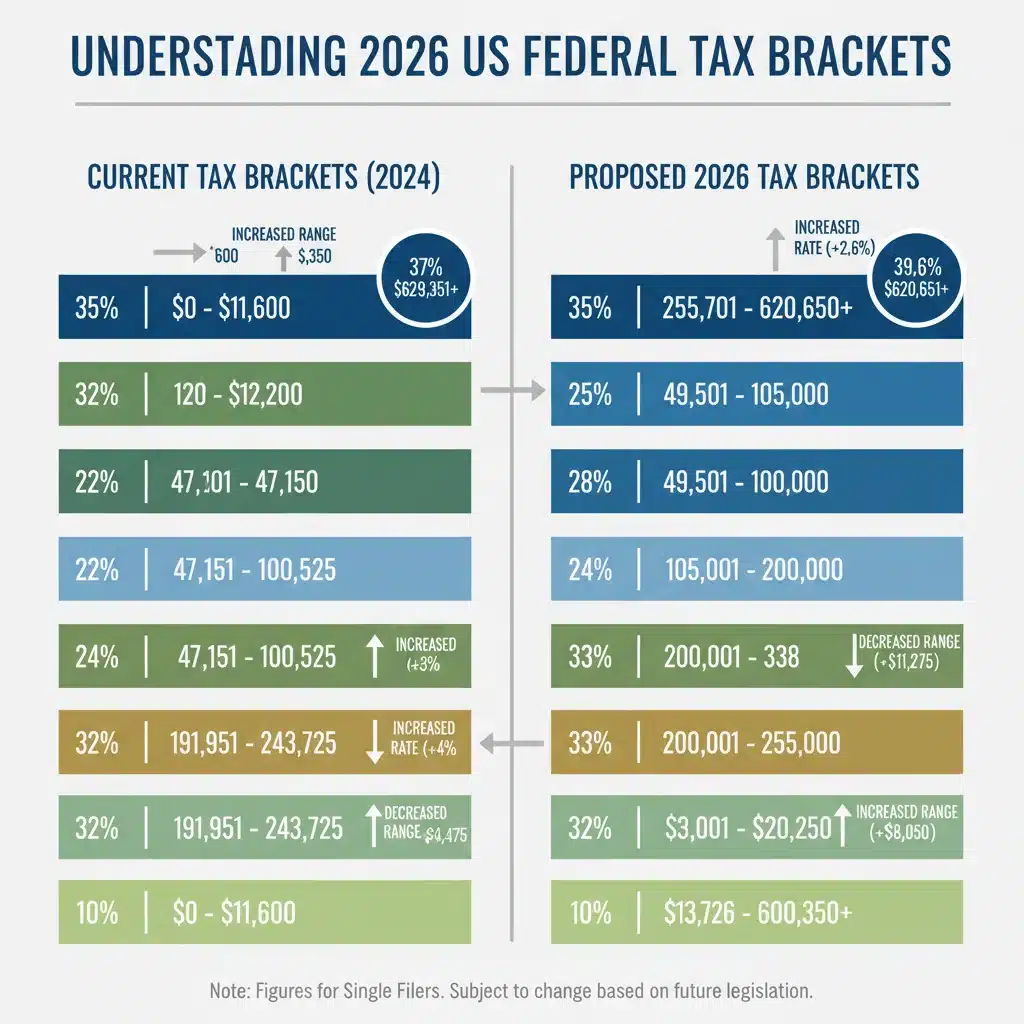
One of the most significant anticipated changes relates to individual income tax rates and brackets. Under the TCJA, tax rates were generally lowered across most income levels. When these provisions expire, it’s likely that the seven individual income tax brackets will revert to their higher pre-TCJA levels. For instance, the top marginal tax rate could increase, and the thresholds for each bracket might be adjusted, pushing more income into higher tax categories. Understanding your current and projected income, and how it aligns with these potential new brackets, is the first step in strategic tax planning.
Standard Deduction vs. Itemized Deductions
The TCJA significantly increased the standard deduction, leading many taxpayers to opt for it rather than itemizing. With the expiration of these provisions, the standard deduction amounts are expected to decrease. This change will compel more taxpayers to re-evaluate whether itemizing deductions, such as state and local taxes (SALT), mortgage interest, and charitable contributions, becomes more advantageous. The SALT deduction cap of $10,000, implemented under the TCJA, is also a contentious point and its future remains uncertain. Monitoring these developments will be crucial for maximizing your deductions under the Tax Code Changes 2026.
Child Tax Credit and Other Family-Related Provisions
The Child Tax Credit also saw substantial modifications under the TCJA, including an increase in the credit amount and expanded eligibility. These changes are also slated to expire. While there’s ongoing debate about making some of these enhancements permanent, it’s essential to prepare for a potential reduction in the credit amount and stricter eligibility requirements. Families with children should pay close attention to these specific Tax Code Changes 2026, as they can significantly impact household finances.
Estate and Gift Tax Exemptions
For high-net-worth individuals, the estate and gift tax exemptions are another critical area. The TCJA dramatically increased these exemptions, allowing individuals to transfer substantial wealth without incurring federal estate or gift taxes. The expiration of these provisions will likely see the exemption amounts revert to much lower levels, potentially bringing more estates into the federal estate tax purview. Proactive estate planning, including reviewing wills, trusts, and gift strategies, becomes even more vital in anticipation of these Tax Code Changes 2026.
Strategic Approaches to Save 5% on Your Income Taxes
Now that we’ve outlined the potential Tax Code Changes 2026, let’s delve into actionable strategies to help you save at least 5% on your income taxes. These strategies require a forward-thinking approach and may involve consulting with a qualified tax professional.
1. Maximize Retirement Contributions
One of the most effective ways to reduce your taxable income is by maximizing contributions to tax-advantaged retirement accounts. This includes 401(k)s, 403(b)s, Traditional IRAs, and Simplified Employee Pension (SEP) IRAs for self-employed individuals. Contributions to these accounts are often pre-tax, meaning they reduce your adjusted gross income (AGI) for the current year. As tax rates potentially increase in 2026, deferring income to a lower tax bracket in retirement could yield significant savings. Review your contribution limits and plan to fully utilize them before the end of each tax year.
2. Harvest Tax Losses Strategically
Tax loss harvesting involves selling investments at a loss to offset capital gains and, to a limited extent, ordinary income. If you have a diversified investment portfolio, regularly reviewing your holdings for opportunities to sell underperforming assets can be a powerful tax-saving strategy. Up to $3,000 of net capital losses can be used to offset ordinary income each year, with any excess losses carried forward indefinitely. This strategy can be particularly beneficial as you prepare for the Tax Code Changes 2026.
3. Re-evaluate Your Itemized Deductions
With the potential decrease in the standard deduction, it’s crucial to meticulously track and re-evaluate your itemized deductions. Keep detailed records of medical expenses (if they exceed the AGI threshold), state and local taxes paid, mortgage interest, and charitable contributions. Consider “bunching” deductions, where you accelerate certain deductible expenses into one tax year to exceed the standard deduction, and then take the standard deduction in the subsequent year. For instance, making two years’ worth of charitable contributions in one year could be a smart move. Understanding the nuances of these Tax Code Changes 2026 will be key.
4. Optimize Your Charitable Giving
Charitable giving offers various tax benefits. Beyond direct cash contributions, consider strategies like donating appreciated stock or utilizing a Donor-Advised Fund (DAF). Donating appreciated stock held for more than a year allows you to avoid capital gains tax on the appreciation and deduct the fair market value of the stock, subject to certain AGI limitations. A DAF allows you to make a lump-sum contribution, receive an immediate tax deduction, and then recommend grants to charities over time. These methods can be highly effective in reducing your taxable income, especially in light of the Tax Code Changes 2026.
5. Maximize Health Savings Accounts (HSAs)
For those eligible, Health Savings Accounts (HSAs) offer a triple tax advantage: tax-deductible contributions, tax-free growth, and tax-free withdrawals for qualified medical expenses. HSAs can also serve as an additional retirement savings vehicle, as funds can be withdrawn tax-free for any purpose after age 65, though subject to income tax if not used for medical expenses. Maximizing your HSA contributions is a smart strategy to reduce your taxable income and build a tax-advantaged savings nest egg, especially with an eye on the Tax Code Changes 2026.
Business Implications of Tax Code Changes 2026
The Tax Code Changes 2026 will not only affect individuals but also have significant implications for businesses, particularly small and medium-sized enterprises (SMEs). Understanding these changes is crucial for business owners to maintain profitability and ensure compliance.
Qualified Business Income (QBI) Deduction
The Qualified Business Income (QBI) deduction, also known as the Section 199A deduction, allows eligible self-employed and small business owners to deduct up to 20% of their qualified business income. This deduction is also set to expire. If it does, many pass-through entities (S-corps, partnerships, sole proprietorships) could see a substantial increase in their taxable income. Business owners should start modeling the impact of this potential expiration on their tax liability and explore alternative strategies to mitigate the effects, such as re-evaluating business structures or accelerating income where appropriate.
Bonus Depreciation and Section 179 Expensing
The TCJA introduced 100% bonus depreciation, allowing businesses to immediately deduct the full cost of eligible new and used depreciable business assets. This provision has been phasing out and will continue to do so, potentially reaching 0% by 2027. Similarly, Section 179 expensing allows businesses to deduct the full purchase price of qualifying equipment and software. While Section 179 is permanent, its limits are adjusted annually for inflation. Businesses planning significant capital expenditures should consider accelerating these purchases to take advantage of remaining bonus depreciation allowances before they fully expire. These accelerated deductions can significantly reduce taxable income in the short term, providing a buffer against other Tax Code Changes 2026.
Interest Expense Deduction Limitations
Another area of concern for businesses is the limitation on the deduction for business interest expense. The TCJA limited the deduction for business interest to 30% of adjusted taxable income (ATI). This calculation became more restrictive in 2022 by excluding depreciation and amortization from ATI. While this change is already in effect, it’s a reminder of the evolving landscape of business deductions. Businesses with significant debt should analyze their interest expense deductions and explore strategies to manage their debt load or optimize their capital structure in anticipation of continued scrutiny on business deductions under the Tax Code Changes 2026.
Proactive Planning: Your Best Defense Against Tax Increases
The key to successfully navigating the Tax Code Changes 2026 is proactive and informed planning. Waiting until the last minute can limit your options and potentially lead to missed savings. Here’s how to get started:
1. Consult a Tax Professional Early
The most crucial step is to engage with a qualified tax advisor or financial planner who is well-versed in the upcoming Tax Code Changes 2026. They can provide personalized advice based on your specific financial situation, income level, and business structure. A professional can help you model different scenarios, identify potential pitfalls, and recommend tailored strategies to minimize your tax liability and save that crucial 5% or more.
2. Review Your Financial Plan
Take this opportunity to conduct a thorough review of your entire financial plan. This includes your investment portfolio, retirement savings, estate plan, and charitable giving strategies. Ensure that your current financial decisions align with your long-term goals and are optimized for the anticipated tax environment. For example, if you anticipate being in a higher tax bracket in 2026, consider accelerating income into 2025 where possible, or deferring deductions to 2026 if your tax rate is expected to increase.
3. Stay Informed and Adaptable
Tax legislation is dynamic, and while we can anticipate many Tax Code Changes 2026, the final details may evolve. Stay informed by following reputable financial news sources, government tax announcements, and insights from your tax professional. Being adaptable to potential shifts in legislation will ensure you can adjust your strategies as needed.
4. Consider Tax-Efficient Investments
Explore tax-efficient investment vehicles. Municipal bonds, for instance, offer interest income that is often exempt from federal income tax and sometimes state and local taxes, depending on where you live and where the bond is issued. Additionally, consider the tax implications of different investment accounts, such as Roth IRAs (tax-free withdrawals in retirement) versus Traditional IRAs (tax-deductible contributions). These choices can significantly impact your overall tax burden, especially with the looming Tax Code Changes 2026.
5. Evaluate Your Business Structure
For business owners, the Tax Code Changes 2026 provide an opportune moment to re-evaluate your business structure. The expiration of the QBI deduction might make certain entity types more or less advantageous. Discuss with your tax advisor whether converting from a pass-through entity to a C-corporation, or vice-versa, could offer better tax efficiency under the new rules. This is a complex decision with various legal and financial ramifications, so expert guidance is essential.

The Importance of Timely Action
The adage “time is money” holds particularly true when it comes to tax planning for the Tax Code Changes 2026. The earlier you begin to understand and implement strategies, the greater your potential for savings. Procrastination can lead to missed opportunities and a higher tax bill. By acting now, you can:
- Gain Clarity: Understand how the changes specifically impact your financial situation.
- Develop a Robust Strategy: Create a personalized plan to optimize deductions, credits, and income deferral.
- Avoid Surprises: Minimize unexpected tax liabilities that could arise from the new regulations.
- Maximize Savings: Position yourself to save at least 5% on your income taxes, and potentially more, by leveraging every available tax advantage.
- Reduce Stress: Approach tax season with confidence, knowing you’ve taken all necessary steps.
Remember, the goal is not just to comply with the law but to do so in the most tax-efficient manner possible. The Tax Code Changes 2026, while complex, offer a chance to re-evaluate and refine your financial approach. Embrace this opportunity to secure your financial future.
Conclusion: Preparing for a New Tax Era
The anticipated Tax Code Changes 2026 represent a significant shift in the American tax landscape. From individual income tax rates and standard deductions to business expensing and estate tax exemptions, nearly every aspect of taxation is poised for adjustment. While the specifics are still subject to legislative debate and finalization, the overarching trend suggests a return to some pre-TCJA provisions, which could mean higher tax liabilities for many if no action is taken.
However, armed with the knowledge provided in this guide and a proactive mindset, you are well-positioned to not only mitigate potential increases but also to identify opportunities for substantial tax savings. By maximizing retirement contributions, strategically harvesting tax losses, re-evaluating itemized deductions, optimizing charitable giving, and fully utilizing HSAs, individuals can significantly reduce their taxable income. Business owners, too, have critical decisions to make regarding the QBI deduction, bonus depreciation, and interest expense limitations.
The key takeaway is clear: don’t wait. Engage with a tax professional, review your financial plan, and stay informed about legislative developments. By taking these steps now, you can confidently navigate the Tax Code Changes 2026, ensure compliance, and achieve your goal of saving at least 5% on your income taxes. Your financial well-being in the coming years depends on the foresight and strategic decisions you make today.