AI in Education: 4 Key Trends Shaping US Learning by 2026

Artificial intelligence is fundamentally reshaping US education, with personalized learning, automated administration, intelligent tutoring, and data-driven insights emerging as critical trends by 2026, necessitating proactive adaptation from institutions and educators.
The landscape of education in the United States is undergoing a profound transformation, largely driven by the rapid advancements in artificial intelligence. By 2026, AI in US Education will not merely be a supplementary tool but a foundational element reshaping learning environments. This shift promises to redefine how students learn, how teachers teach, and how educational institutions operate, bringing both exciting opportunities and significant challenges.
The Rise of Personalized Learning Experiences
One of the most impactful trends in AI in US Education is the burgeoning capability for personalized learning. Traditional one-size-fits-all approaches are increasingly being replaced by systems that adapt to individual student needs, learning styles, and paces, fostering more effective and engaging educational journeys.
AI algorithms can analyze a student’s performance, identify areas of strength and weakness, and then tailor content, exercises, and feedback accordingly. This adaptive learning environment ensures that each student receives instruction that is optimally suited to their cognitive profile, maximizing comprehension and retention.
Adaptive Content Delivery
AI-powered platforms are becoming adept at delivering content that dynamically adjusts to a student’s progress. Instead of static textbooks, students interact with modules that evolve based on their responses, ensuring they are always challenged appropriately.
- Individualized pace adjustment for complex topics.
- Real-time feedback on assignments and quizzes.
- Curated resources based on specific learning gaps.
- Gamified learning paths that maintain student engagement.
This level of personalization was once an aspirational goal, requiring immense human resources. However, AI is making it scalable and accessible, promising a future where every student can learn in the way that best suits them.
Intelligent Tutoring Systems
Beyond content delivery, AI is enabling sophisticated intelligent tutoring systems. These systems can act as virtual tutors, providing one-on-one support, answering questions, and guiding students through challenging concepts, often mimicking the Socratic method.
These tutors are not just pre-programmed responses; they learn from student interactions, improving their ability to explain concepts and offer relevant examples. This constant availability of personalized guidance can significantly reduce learning frustrations and improve academic outcomes, especially for students who might otherwise struggle to access human tutoring.
The continuous evolution of AI in personalized learning means that by 2026, we can expect even more nuanced and responsive educational tools that truly understand and cater to the unique needs of each learner, moving beyond simple adaptive quizzes to truly dynamic educational partners.
Automating Administrative Tasks and Operational Efficiency
Beyond the classroom, AI is poised to revolutionize the administrative backbone of US educational institutions. By automating mundane, repetitive tasks, AI can free up valuable time for educators and staff, allowing them to focus on more strategic and student-centric activities.
From managing enrollments to scheduling classes and handling parent communications, AI can streamline numerous operational processes. This not only enhances efficiency but also reduces the potential for human error, leading to smoother and more reliable institutional operations.
Streamlined Enrollment and Admissions
AI-driven systems can process applications, verify documents, and even conduct initial assessments for admissions, significantly speeding up what was once a time-consuming manual process. Chatbots powered by AI can answer prospective students’ frequently asked questions 24/7, improving applicant experience.
- Automated data entry and verification.
- Predictive analytics for enrollment forecasting.
- Personalized communication with applicants.
- Reduced processing times for admissions decisions.
This automation allows admissions officers to dedicate more time to engaging with promising candidates and addressing complex inquiries, rather than being bogged down by paperwork.
Optimizing Resource Allocation
AI can analyze vast datasets related to student demographics, course popularity, facility usage, and budget constraints to help administrators make more informed decisions about resource allocation. This includes optimizing classroom assignments, scheduling faculty, and even predicting maintenance needs for school infrastructure.
By leveraging AI for these tasks, institutions can operate more efficiently, saving costs and ensuring that resources are directed where they are most needed. The ultimate goal is to create a more responsive and effective educational environment for all stakeholders, from students to staff.
The integration of AI into administrative functions by 2026 will undoubtedly lead to more agile and responsive educational systems, allowing institutions to adapt quickly to changing demands and better serve their communities.
Enhanced Data-Driven Instructional Strategies
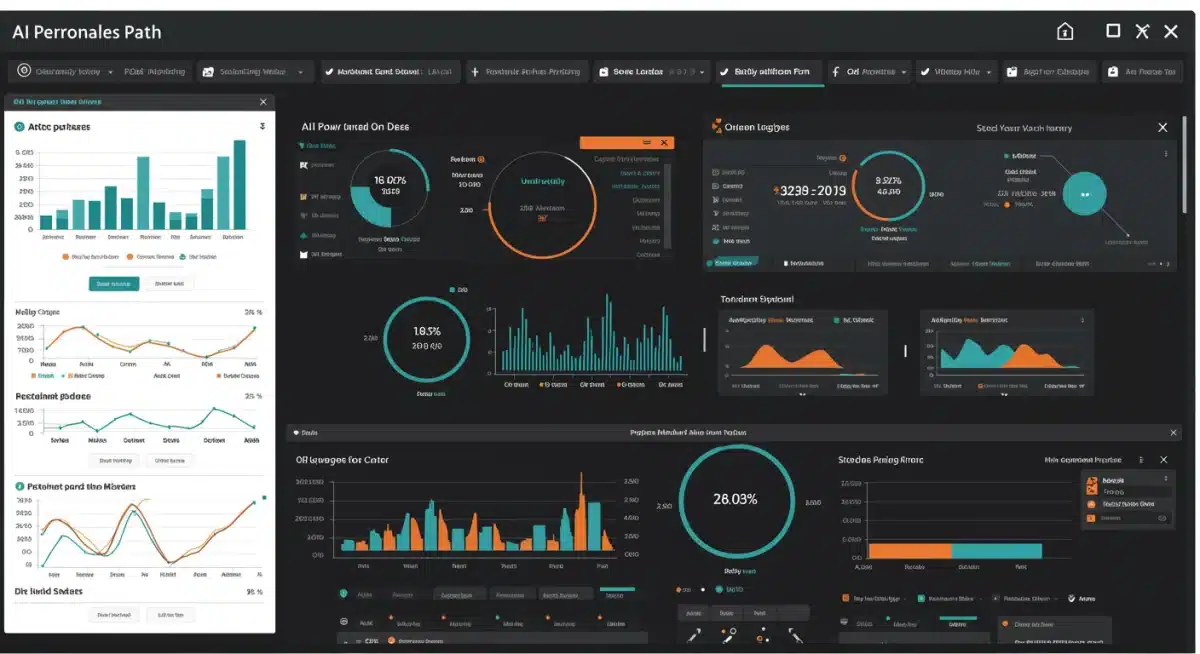
The ability of AI to collect, analyze, and interpret vast amounts of data is transforming instructional strategies in US education. Educators can now gain unprecedented insights into student learning patterns, allowing for more informed decision-making and continuous improvement of teaching methods.
AI platforms can track student engagement, identify common misconceptions, and even predict which students might be at risk of falling behind. This data-driven approach moves beyond subjective assessments, providing concrete evidence to guide interventions and curriculum development.
Predictive Analytics for Student Success
One of the most promising applications of AI is its capacity for predictive analytics. By analyzing historical data and current performance metrics, AI can identify students who might be struggling academically or at risk of dropping out, allowing for early intervention.
This proactive approach means that support can be offered before problems escalate, potentially saving students from academic failure. Educators can then tailor their support strategies, whether it’s providing additional tutoring, counseling, or modified assignments.
Curriculum Development and Refinement
AI can also play a crucial role in curriculum development. By analyzing student performance across different topics and learning objectives, AI can highlight areas where the curriculum might be ineffective or where students consistently struggle. This feedback loop is invaluable for refining educational content.
- Identification of challenging concepts for students.
- Assessment of content effectiveness based on outcomes.
- Suggestions for new learning materials or approaches.
- Benchmarking performance against educational standards.
The insights offered by AI allow for a dynamic and evidence-based approach to curriculum design, ensuring that educational programs remain relevant, engaging, and effective for diverse student populations.
By 2026, data-driven instructional strategies powered by AI will be a cornerstone of effective teaching, enabling educators to understand their students better and continuously optimize their pedagogical approaches for improved outcomes.
Addressing Challenges and Ethical Considerations
While the potential benefits of AI in US Education are immense, its widespread adoption also brings forth a host of challenges and ethical considerations that must be carefully addressed. Ensuring equitable access, maintaining data privacy, and navigating the impact on human interaction are paramount.
The rapid evolution of AI technology means that policy frameworks and ethical guidelines often lag behind its capabilities. Proactive measures are necessary to harness AI’s power responsibly and mitigate potential harms, ensuring that it serves to enhance, not diminish, the educational experience.
Ensuring Equity and Access
A significant concern is the potential for AI to exacerbate existing inequalities. Disparities in access to technology, reliable internet, and digital literacy could create a divide between students who benefit from AI-enhanced learning and those who are left behind. Efforts must be made to ensure that AI tools are accessible to all students, regardless of their socioeconomic background or geographical location.
Furthermore, the data used to train AI models must be diverse and representative to avoid biases that could disadvantage certain student groups. A biased AI system could perpetuate or even amplify existing educational inequalities.
Data Privacy and Security
AI systems in education collect vast amounts of sensitive student data, from academic performance to behavioral patterns. Protecting this data from breaches and misuse is critical. Robust data privacy policies and secure technological infrastructures are essential to maintain trust among students, parents, and educators.
- Strict adherence to data protection regulations like FERPA.
- Transparent data collection and usage policies.
- Anonymization and aggregation of student data where appropriate.
- Regular security audits of AI platforms.
Without clear guidelines and strong safeguards, the integration of AI could lead to significant privacy concerns, undermining the very trust that is necessary for effective learning environments.
The Role of Human Educators
Another crucial consideration is the evolving role of human educators. While AI can automate many tasks, it cannot replace the empathy, critical thinking, and social-emotional guidance that human teachers provide. The challenge lies in integrating AI as a supportive tool, empowering teachers rather than diminishing their role.
Teachers will need new skills to effectively utilize AI tools, interpret data, and guide students through AI-enhanced learning environments. Professional development programs are vital to ensure educators are prepared for this technological shift.
By actively addressing these challenges and embedding ethical considerations into the development and deployment of AI in education, the US can ensure that these powerful tools serve to uplift and empower all learners by 2026.
Preparing Educators for an AI-Integrated Future
As AI becomes increasingly embedded in US learning environments, the role of educators is undergoing a significant transformation. Preparing teachers for this AI-integrated future is not just about technical proficiency but also about fostering new pedagogical approaches and critically evaluating AI’s impact.
Professional development programs must evolve to equip educators with the skills to leverage AI effectively, understand its limitations, and guide students in a world where AI tools are commonplace. This preparation is essential for maintaining the human element in education while embracing technological progress.
New Skill Sets for Teachers
Teachers will need to develop new competencies that go beyond traditional teaching methods. This includes understanding how AI algorithms work, interpreting data insights from AI platforms, and effectively integrating AI tools into their lesson plans.
Moreover, educators will play a crucial role in teaching students about AI literacy, ethical AI use, and how to collaborate with AI tools responsibly. They will become facilitators of learning in environments where AI acts as a powerful assistant.
Rethinking Pedagogical Approaches
The presence of AI necessitates a re-evaluation of pedagogical strategies. With AI handling personalized content delivery and basic tutoring, teachers can shift their focus to higher-order skills, critical thinking, creativity, and socio-emotional development.
- Facilitating collaborative projects using AI tools.
- Guiding discussions on AI’s societal implications.
- Designing complex problem-solving scenarios.
- Mentoring students in their independent AI-assisted research.
This shift allows teachers to move from being primary knowledge dispensers to becoming mentors, coaches, and ethical guides in a more dynamic and technologically rich learning landscape.
By proactively investing in educator training and adapting teaching methodologies, US education can ensure that its workforce is well-prepared to harness the full potential of AI, creating a more enriching and future-proof learning experience for students by 2026.
Shaping Future Learning Environments with AI
The confluence of AI’s advancements and the dynamic needs of modern learners is fundamentally shaping the future of US learning environments. By 2026, we anticipate classrooms and educational institutions to be profoundly different spaces, characterized by greater adaptability, inclusivity, and efficiency, driven by intelligent technologies.
This transformation extends beyond simply adopting new tools; it involves a holistic rethinking of educational infrastructure, curriculum design, and the very nature of teaching and learning itself. AI promises to create environments that are more responsive to individual needs and better equipped to prepare students for the complexities of the future.
Flexible and Hybrid Learning Models
AI will further enable and refine flexible and hybrid learning models, allowing for seamless transitions between in-person and remote instruction. AI-powered platforms can manage complex scheduling, provide remote support, and ensure consistent learning experiences across different modalities.
This flexibility is crucial for addressing diverse student needs, accommodating unforeseen circumstances, and expanding access to high-quality education beyond traditional geographical boundaries. AI can help personalize these hybrid experiences, ensuring engagement regardless of the learning setting.
AI-Powered Assessment and Feedback
The future of assessment will be significantly influenced by AI. Beyond simple grading, AI can provide nuanced, real-time feedback on student work, identifying patterns in errors, suggesting areas for improvement, and even assessing higher-order thinking skills.
- Automated grading of essays and complex problem sets.
- Diagnostic feedback that explains ‘why’ an answer is incorrect.
- Personalized recommendations for practice based on assessment results.
- Reduced grading burden for educators, allowing more focus on teaching.
This immediate and detailed feedback loop is invaluable for student learning, allowing them to correct misunderstandings quickly and improve their skills more effectively than traditional, delayed feedback mechanisms.
Ultimately, AI is not just changing how we teach, but also what we teach and how we assess learning. By 2026, US learning environments will be dynamic ecosystems where AI collaborates with educators to foster innovative, equitable, and highly effective educational outcomes for all.
| Key Trend | Brief Description |
|---|---|
| Personalized Learning | AI tailors content and pace to individual student needs, enhancing engagement and effectiveness. |
| Administrative Automation | AI streamlines tasks like enrollment and scheduling, improving operational efficiency for institutions. |
| Data-Driven Instruction | AI provides insights into student performance, enabling educators to refine teaching strategies. |
| Ethical Considerations | Addressing equity, data privacy, and the evolving role of educators is crucial for responsible AI adoption. |
Frequently Asked Questions About AI in US Education
By 2026, AI will personalize learning through adaptive platforms that analyze student performance and learning styles. These systems will tailor content, exercises, and feedback in real-time, ensuring each student receives instruction best suited to their individual needs and pace.
AI will automate numerous administrative tasks, including processing student enrollments, optimizing class schedules, managing facility usage, and handling routine communications. This automation aims to enhance operational efficiency and free up staff for more impactful, student-focused activities.
AI will provide educators with unprecedented data insights into student learning patterns and performance. This enables predictive analytics to identify at-risk students early and refines curriculum development based on evidence, leading to more effective and targeted teaching methods.
Key ethical concerns include ensuring equitable access to AI tools for all students, protecting sensitive student data privacy and security, and carefully managing the evolving role of human educators. Addressing these requires robust policies and responsible implementation.
Educators will require new professional development focusing on AI literacy, effective integration of AI tools into pedagogy, and interpreting AI-generated data. Their role will shift towards mentoring and facilitating higher-order thinking, ensuring a balanced human-AI collaborative learning environment.
Conclusion
The integration of AI into US learning environments by 2026 is set to be a transformative force, fundamentally reshaping how education is delivered and experienced. While offering incredible potential for personalized learning, administrative efficiency, and data-driven insights, it also necessitates careful consideration of ethical implications, equitable access, and the evolving role of human educators. Proactive engagement with these trends will be crucial for institutions to harness AI’s full power responsibly, ensuring a future where education is more adaptable, inclusive, and effective for every student.