Choosing Your College Major: A Data-Driven Guide for Future Students

Choosing Your College Major: A Data-Driven Guide for Future Students
The journey to higher education is often paved with excitement, anticipation, and a fair share of daunting decisions. Among the most pivotal of these is selecting your college major. For students aiming to enter college in 2026, this choice is more complex than ever, influenced by rapidly evolving job markets, technological advancements, and a globalized economy. Gone are the days when a gut feeling alone sufficed; today, a data-driven approach to College Major Selection is not just beneficial, but essential. This comprehensive guide will equip you with the tools and insights needed to make an informed decision, aligning your passions with promising career opportunities and long-term satisfaction.
Choosing a college major isn’t merely about picking a field of study; it’s about laying the groundwork for your future career, personal growth, and financial stability. It’s an investment of time, money, and effort, and like any significant investment, it warrants careful research and strategic planning. This article delves into the various facets of this decision, providing actionable advice and highlighting the importance of leveraging data to navigate the myriad options available.
Understanding the Landscape of Higher Education and Careers
Before diving into specific majors, it’s crucial to grasp the broader context of today’s educational and professional landscape. The world is changing at an unprecedented pace, and what might be a high-demand field today could be significantly different in a decade. Therefore, adopting a forward-thinking perspective is key to effective College Major Selection.
The Evolving Job Market: Trends to Watch
Several macro trends are shaping the future of work. Automation, artificial intelligence, and globalization are transforming industries, creating new jobs while making others obsolete. Understanding these trends can help you identify majors that will remain relevant and in-demand. For instance, fields related to technology, healthcare, renewable energy, and data science are consistently showing strong growth projections. Consider:
- Technological Advancements: AI, machine learning, cybersecurity, and software development are not just buzzwords; they represent robust career paths with high earning potential.
- Healthcare Demands: An aging global population and advancements in medical science ensure a continuous need for healthcare professionals, from doctors and nurses to biomedical engineers and public health specialists.
- Sustainability and Green Economy: As climate change concerns grow, careers in environmental science, renewable energy technologies, and sustainable development are on the rise.
- Data-Driven Decision Making: The ability to collect, analyze, and interpret data is becoming critical across all sectors, making data analytics, statistics, and business intelligence highly valuable skills.
The Value of a Degree: Beyond the Diploma
While a college degree is often seen as a gateway to better opportunities, its value extends beyond just employment. Higher education fosters critical thinking, problem-solving skills, and a broader understanding of the world. These soft skills are increasingly sought after by employers, regardless of the specific major. When making your College Major Selection, consider how a program will develop these transferable skills, not just technical knowledge.
Step-by-Step Data-Driven College Major Selection
This section outlines a structured approach to choosing your major, integrating personal reflection with empirical data.
Step 1: Self-Assessment – Knowing Thyself
The first and most crucial step in College Major Selection is a thorough self-assessment. What are your interests, passions, strengths, and values? What kind of work truly excites you? What problems do you enjoy solving?
- Interests and Passions: Make a list of subjects you genuinely enjoy studying, hobbies you pursue, and topics that spark your curiosity. Do you love writing, solving puzzles, understanding human behavior, or building things?
- Strengths and Talents: Identify your natural aptitudes. Are you good at math, creative writing, public speaking, or scientific experimentation? Consider what comes easily to you and where you excel.
- Values and Goals: What do you prioritize in life and a career? Is it financial security, making a social impact, creative expression, work-life balance, or continuous learning? Your values should guide your choices.
- Personality Assessments: Tools like the Myers-Briggs Type Indicator, Holland Codes (RIASEC), or other career assessment tests can offer valuable insights into your preferred work environments and suitable career paths. While not definitive, they can be excellent starting points for discussion and further exploration.
The goal here is to create a shortlist of potential areas that resonate with your inner self. This personal foundation is vital for long-term job satisfaction and resilience.
Step 2: Researching Majors and Career Paths – The Data Dive
Once you have a clearer understanding of yourself, it’s time to connect those insights with external data. This is where the ‘data-driven’ aspect of your College Major Selection truly comes into play.
Exploring Academic Programs:
Look into specific majors that align with your self-assessment. Don’t just read the major title; delve into the curriculum. What courses are required? What skills will you develop? What kind of projects will you undertake? Websites of universities and college catalogs are excellent resources.
Understanding Career Outcomes Data:
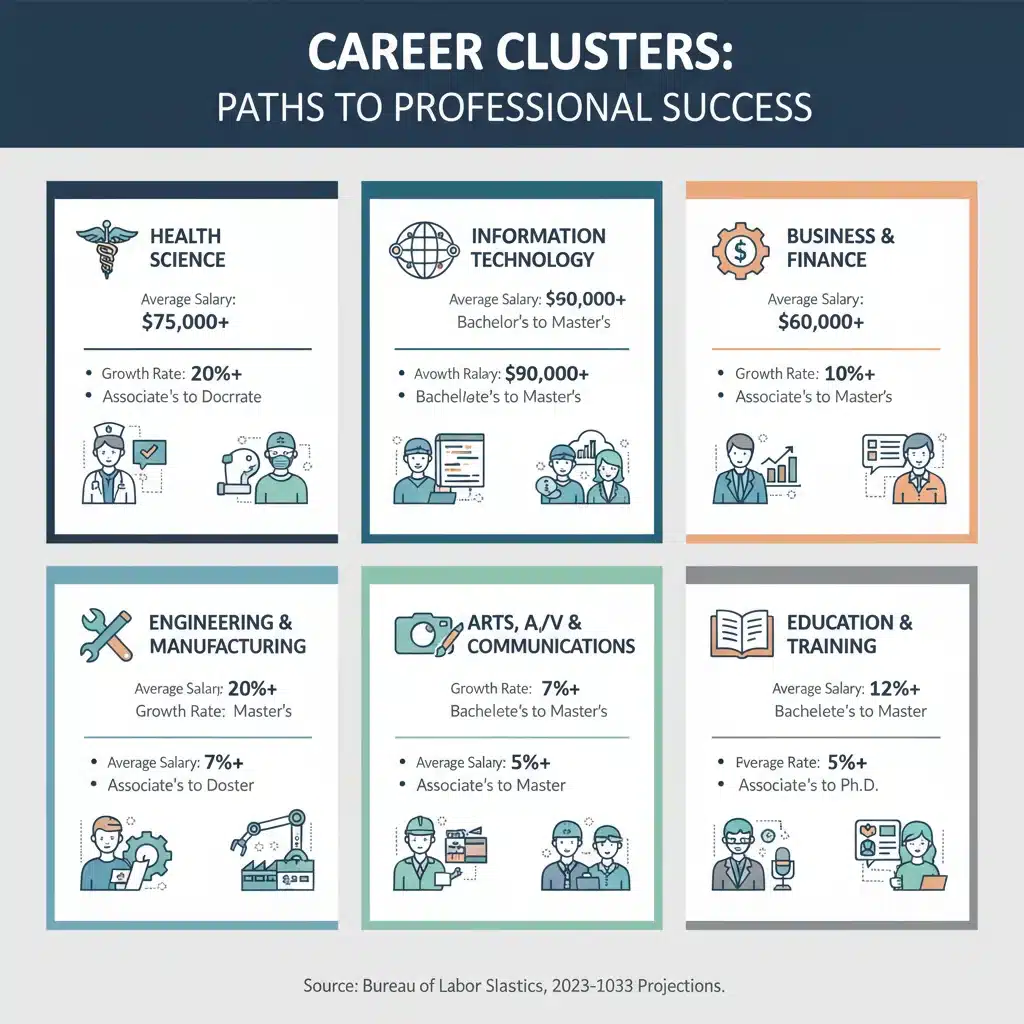
This is perhaps the most critical data point. For each potential major, research the typical career paths it leads to. More importantly, look at:
- Employment Rates: What percentage of graduates from this major find employment within six months or a year of graduation?
- Starting Salaries and Earning Potential: While money isn’t everything, it’s a significant factor. Research average starting salaries and projected mid-career earnings for jobs related to your chosen major. Websites like the U.S. Bureau of Labor Statistics (BLS), Payscale, and Glassdoor provide extensive data.
- Job Growth Projections: Is the field growing, stable, or declining? The BLS Occupational Outlook Handbook is an invaluable resource for this. Prioritize majors that lead to careers with positive growth outlooks.
- Industry Trends: Beyond specific jobs, understand the industries associated with your major. Are these industries expanding, innovating, or facing significant disruption?
Don’t be afraid to cast a wide net initially. Even if a major seems unconventional, if it aligns with your interests and has positive career data, it’s worth exploring further.
Step 3: Bridging the Gap – Connecting Interests with Opportunities
The challenge now is to find the sweet spot where your personal interests and strengths intersect with promising career opportunities. This iterative process often involves:
- Identifying Overlaps: Look for majors that allow you to pursue your passions while also opening doors to high-demand fields. For example, if you love writing, consider technical writing, content strategy for tech companies, or journalism with a focus on science or business – all fields that leverage writing skills in growing sectors.
- Considering Interdisciplinary Studies: Many modern challenges require a multi-faceted approach. Interdisciplinary majors (e.g., Cognitive Science, Environmental Economics, Digital Humanities) can equip you with a diverse skill set that is highly valued in the contemporary job market. This can be a strategic move for College Major Selection.
- Minor and Concentration Options: If your primary passion doesn’t directly lead to a high-demand career, consider majoring in a field with strong career prospects and minoring in your passion area. This allows you to develop marketable skills while still nurturing your interests. For instance, a major in Computer Science with a minor in Fine Arts.
Step 4: Experiential Learning and Networking
No amount of data can fully replace real-world experience. Once you have a few potential majors in mind, seek out opportunities for experiential learning and networking.
- Informational Interviews: Talk to professionals working in fields related to your potential majors. Ask them about their daily tasks, career trajectory, challenges, and what they enjoy most about their work. These firsthand accounts can provide invaluable qualitative data to complement your quantitative research.
- Internships and Volunteering: If possible, gain practical experience through internships, part-time jobs, or volunteering. This allows you to test out a field before committing to a major. For high school students, even shadowing professionals or participating in relevant clubs can be insightful.
- Online Courses and Workshops: Platforms like Coursera, edX, and Udemy offer introductory courses in various subjects. This is a low-commitment way to explore interests and gain foundational knowledge without enrolling in a full degree program.
These experiences can either confirm your interest in a particular major or reveal that it’s not the right fit, saving you time and resources down the line. They are crucial for a well-rounded College Major Selection process.
Key Data Points to Consider for 2026 Students
For students entering college in 2026, certain data points will be particularly relevant. The emphasis on future-proofing your education has never been stronger.
Long-Term Earning Potential vs. Starting Salary
While starting salaries are important, don’t let them be the sole determinant. Some majors, particularly in the humanities or social sciences, might have lower starting salaries but offer significant growth potential as you gain experience and specialize. Look at mid-career and late-career earning potentials. Data from sources like Georgetown University Center on Education and the Workforce often provide these long-term projections.
Skills Gap Analysis
Research current and projected skills gaps in the labor market. What skills are employers struggling to find? Often, these include not just technical skills (e.g., coding, data analysis) but also soft skills (e.g., critical thinking, communication, adaptability, emotional intelligence). Choose a major that helps you develop a blend of both. This holistic approach strengthens your College Major Selection.
Return on Investment (ROI) of a Degree
Consider the ROI of different majors and universities. This involves weighing the cost of tuition against potential future earnings and career satisfaction. While not purely financial, a positive ROI ensures that your investment in education pays off in various forms. Resources like College Scorecard from the U.S. Department of Education provide data on earnings and debt by institution and major.
Geographic Demand
Where do you envision yourself living and working? The demand for certain professions can vary significantly by region. For example, tech jobs are concentrated in specific hubs, while healthcare needs are more evenly distributed. Factor in geographic demand when assessing career prospects for different majors.
Common Pitfalls to Avoid in College Major Selection
Even with a data-driven approach, it’s easy to fall into common traps. Be aware of these to make a more robust decision:
- Following the Crowd: Just because a major is popular doesn’t mean it’s right for you. Peer pressure or parental expectations can lead to choices that don’t align with your true interests or strengths. Your College Major Selection should be personal.
- Ignoring Personal Interests: While data is crucial, completely disregarding your passions can lead to burnout and dissatisfaction. Find a balance between what you love and what the market demands.
- Focusing Only on Money: High-paying jobs are attractive, but a career solely driven by salary can be unfulfilling. Consider the overall quality of life, work-life balance, and impact potential.
- Not Being Flexible: Your major choice isn’t set in stone. Many students change majors, and that’s perfectly normal. Be open to adapting as you learn more about yourself and the world.
- Lack of Research: Relying on anecdotes or outdated information can be detrimental. Always seek out reliable, current data sources.

The Role of Advisors and Mentors
As you navigate this complex decision, remember that you don’t have to do it alone. Academic advisors, career counselors, and mentors can provide invaluable guidance. They can help you interpret data, explore options, and connect you with resources. Seek out these individuals at your high school, prospective colleges, or within your professional network. Their experience and insights can be a crucial complement to your data-driven approach to College Major Selection.
Embracing Flexibility and Continuous Learning
Finally, it’s important to understand that your college major is a significant step, but it is not your entire destiny. The modern workforce values adaptability and a commitment to lifelong learning. The skills you acquire and the critical thinking abilities you develop will be far more important than the specific title of your degree in the long run. Many successful professionals work in fields entirely unrelated to their undergraduate major, having pivoted based on new interests, opportunities, or further education.
Your College Major Selection should be seen as a strong foundation, not an unchangeable blueprint. Be prepared to continue learning, acquiring new skills, and even re-skilling throughout your career. The world is dynamic, and so too should be your approach to professional development.
Conclusion: Making Your Informed Decision
Choosing a college major is one of the most significant decisions you’ll make as you embark on your adult life. For 2026 students, this choice demands a strategic, data-driven approach that balances personal passions with market realities. By undertaking thorough self-assessment, meticulously researching academic programs and career outcomes, leveraging experiential learning, and embracing flexibility, you can make an informed decision that sets you on a path to success and fulfillment.
Remember, the goal is not just to pick a major, but to choose a path that excites you, challenges you, and prepares you for a future where you can thrive. Use data as your compass, but let your inner voice guide you towards a truly meaningful College Major Selection. Your future self will thank you for the thoughtful consideration you put in today.