Fed Rate Hike: Mortgage Impact in Next 6 Months

The latest Federal Reserve interest rate hike will likely lead to increased borrowing costs, directly affecting new mortgage rates and potentially influencing adjustable-rate mortgage payments for homeowners in the coming six months.
Navigating the Latest Federal Reserve Interest Rate Hike: What It Means for Your Mortgage in the Next 6 Months is a critical concern for millions of Americans. With borrowing costs on the rise, understanding the immediate and near-term implications for your housing finances is more important than ever.
Understanding the Federal Reserve’s Role in Mortgage Rates
The Federal Reserve, often referred to as the Fed, plays a pivotal role in the U.S. economy, primarily through its monetary policy decisions. When the Fed decides to raise interest rates, it doesn’t directly set mortgage rates, but its actions have a profound ripple effect across the financial markets. This initial section will clarify the mechanisms through which the Fed’s decisions influence what you pay for your home loan.
The Fed’s primary tool is the federal funds rate, which is the target rate for overnight lending between banks. When the Fed raises this target rate, it makes it more expensive for banks to borrow money from each other. This increased cost trickles down, affecting other interest rates throughout the economy, including those for consumer loans, car loans, and, crucially, mortgages. It’s a fundamental economic principle: higher costs for banks typically translate to higher costs for consumers.
The Federal Funds Rate and Its Indirect Influence
While the federal funds rate is an overnight rate, it serves as a benchmark for longer-term rates. Mortgage rates, especially fixed-rate mortgages, are more closely tied to the yield on U.S. Treasury bonds, particularly the 10-year Treasury note. However, the Fed’s monetary policy, including its stance on inflation and economic growth, heavily influences Treasury yields. When the Fed signals a hawkish stance to combat inflation by raising rates, investors often sell off existing bonds, driving yields up. This upward pressure on Treasury yields typically leads to higher mortgage rates.
- Federal Funds Rate: The rate banks charge each other for overnight loans.
- Monetary Policy: Actions undertaken by a central bank to influence the availability and cost of money and credit.
- Treasury Yields: The return an investor receives on a U.S. Treasury bond, a key indicator for mortgage rates.
Furthermore, market sentiment plays a significant role. When the Fed announces a rate hike, it often creates expectations of continued rate increases or a tighter monetary environment. Lenders, anticipating higher future borrowing costs, adjust their mortgage offerings accordingly, often preemptively raising rates even before the full impact of the Fed’s decision is felt. This forward-looking behavior by financial institutions means that the psychological effect of a Fed announcement can be as powerful as the actual rate change itself.
In conclusion, the Federal Reserve’s interest rate decisions act as a powerful lever, indirectly but substantially shaping the landscape of mortgage rates. Understanding this connection is the first step in preparing for the financial adjustments that may lie ahead for homeowners and prospective buyers.
Immediate Impact on New Mortgage Applications
For those currently in the market for a new home or considering refinancing, the immediate aftermath of a Federal Reserve interest rate hike can be a period of significant adjustment. The cost of borrowing money for a home loan typically rises, leading to higher monthly payments and potentially altering affordability calculations. This section delves into the direct and immediate consequences for new mortgage applicants.
When the Fed raises its benchmark rate, lenders respond by adjusting their mortgage rates upward. This means that a borrower seeking a 30-year fixed-rate mortgage, for example, will likely encounter a higher interest rate than they would have just a few weeks prior. Even a seemingly small increase in the interest rate can translate into a substantial difference in monthly payments over the life of a loan. For a $300,000 mortgage, a half-percentage point increase in interest can add hundreds of dollars to the monthly bill, significantly impacting a household budget.
Affordability and Qualification Challenges
- Increased Monthly Payments: Higher rates directly lead to larger monthly principal and interest payments.
- Reduced Purchasing Power: Buyers may qualify for a smaller loan amount at higher rates, limiting their housing options.
- Stricter Qualification Criteria: Lenders might tighten debt-to-income ratios and credit score requirements.
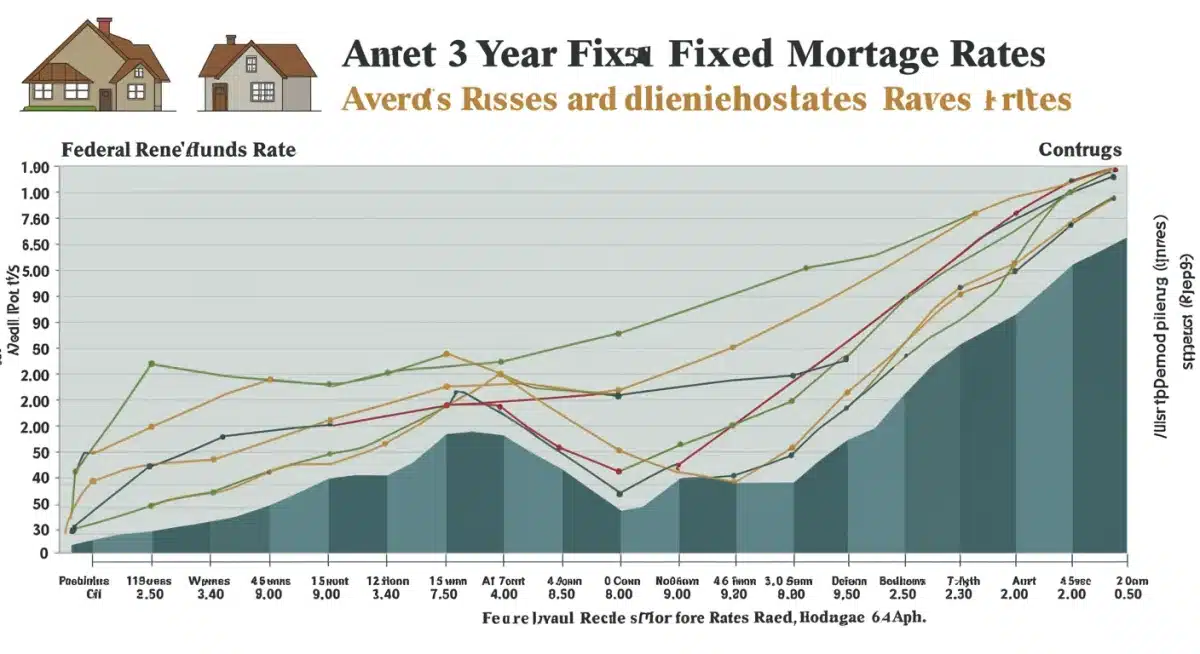
Furthermore, the increased cost of borrowing can cool down a previously hot housing market. As fewer buyers can afford the higher payments, demand may decrease, which could lead to a stabilization or even a slight decline in home prices in some areas. However, this effect is often localized and depends on various other market factors, including inventory levels and regional economic strength. For new applicants, the immediate impact is undeniable: the cost of entry into homeownership becomes more expensive, demanding careful financial planning and potentially a recalibration of expectations.
In summary, a Fed rate hike immediately translates to higher mortgage rates for new applicants, increasing monthly payments and potentially creating hurdles for loan qualification and overall affordability in the housing market.
Impact on Existing Adjustable-Rate Mortgages (ARMs)
While fixed-rate mortgages remain unaffected by subsequent rate changes once locked in, homeowners with adjustable-rate mortgages (ARMs) face a different reality following a Federal Reserve interest rate hike. ARMs are designed to fluctuate with market interest rates, meaning a Fed increase can directly translate to higher monthly payments for these borrowers. Understanding this dynamic is crucial for ARM holders to anticipate and plan for potential financial adjustments.
Adjustable-rate mortgages typically start with a fixed interest rate for an initial period, such as 3, 5, 7, or 10 years. After this initial period, the interest rate adjusts periodically, usually annually, based on a specified index plus a margin. Common indices include the Secured Overnight Financing Rate (SOFR) or the Constant Maturity Treasury (CMT) rates. When the Federal Reserve raises its benchmark rate, these underlying indices tend to rise as well, directly impacting the interest rate on an ARM.
Understanding ARM Adjustments and Caps
For ARM holders, the timing of their loan’s adjustment period is critical. If your ARM is scheduled to adjust in the months following a Fed rate hike, you will likely see an increase in your interest rate and, consequently, your monthly mortgage payment. It’s important to review your ARM loan documents to understand the specific index your loan uses, the margin applied, and the adjustment frequency.
- Adjustment Period: The frequency at which your ARM rate can change (e.g., annually).
- Index: The benchmark interest rate that your ARM is tied to (e.g., SOFR, CMT).
- Margin: A fixed percentage added to the index to determine your interest rate.
- Rate Caps: Limits on how much your interest rate can increase at each adjustment period and over the life of the loan.
Most ARMs include rate caps, which limit how much your interest rate can increase during a single adjustment period and over the entire life of the loan. These caps provide some protection against drastic payment increases, but it’s essential to know what your specific caps are. Even with caps, a series of Fed rate hikes can lead to gradual but significant increases in your monthly payments over time, potentially reaching the lifetime cap.
Homeowners with ARMs should proactively monitor interest rate trends and consult with their lenders or financial advisors. Exploring options such as refinancing into a fixed-rate mortgage, if current rates are still favorable, or making extra principal payments to reduce the loan balance before adjustments, can be prudent strategies. The impact on ARMs is direct and requires careful attention to avoid financial strain.
In conclusion, a Federal Reserve interest rate hike directly affects existing adjustable-rate mortgages, often leading to increased monthly payments as the underlying indices rise. ARM holders must understand their loan terms and consider proactive financial strategies.
Refinancing Prospects in a Rising Rate Environment
For many homeowners, refinancing has been a popular strategy to lower monthly payments, shorten loan terms, or tap into home equity. However, in an environment of rising interest rates following a Federal Reserve hike, the landscape for refinancing changes significantly. What once seemed like an obvious financial move might now require more careful consideration and a different set of expectations.
When interest rates climb, the primary incentive for refinancing—securing a lower rate—diminishes for many. Homeowners who locked in historically low rates during previous periods will likely find current rates less attractive. This doesn’t mean refinancing is entirely off the table, but the motivations and potential benefits shift. Instead of focusing solely on rate reduction, homeowners might consider other objectives, such as changing loan terms or consolidating debt, albeit at a higher interest cost.
When Refinancing Still Makes Sense
Despite rising rates, refinancing can still be a viable option under specific circumstances. For instance, if you have an adjustable-rate mortgage that is about to adjust to a significantly higher rate, refinancing into a fixed-rate mortgage, even if that fixed rate is higher than previous historical lows, could provide stability and predictability in your monthly payments. This move can protect you from further rate increases, offering peace of mind.
- Locking in Stability: Converting an ARM to a fixed-rate mortgage for payment predictability.
- Accessing Home Equity: Cash-out refinancing for necessary home improvements or debt consolidation, if the benefits outweigh the higher rate.
- Shortening Loan Term: Refinancing to a shorter term (e.g., 15-year fixed) to pay off the mortgage faster, even if the monthly payment is higher.
Another scenario where refinancing might be considered is a cash-out refinance. If you have significant equity in your home and need funds for a major expense, such as home renovations or consolidating high-interest debt, a cash-out refinance could still be beneficial. While the new mortgage rate will be higher, the overall savings from eliminating other high-interest debts might make it a financially sound decision. However, this requires a thorough analysis of the total cost of the new loan versus the debt being paid off.
Ultimately, the decision to refinance in a rising rate environment depends on individual financial goals and circumstances. It’s crucial to compare the new loan’s interest rate and closing costs against the potential benefits. Consulting with a mortgage professional can help homeowners evaluate if refinancing aligns with their financial objectives, even when rates are on an upward trajectory.
In conclusion, while rising interest rates make traditional rate-reduction refinancing less appealing, homeowners with ARMs or those seeking to access equity or consolidate debt might still find value in refinancing, provided they carefully weigh the costs against their specific financial goals.
The Housing Market’s Response to Higher Rates
The housing market is highly sensitive to interest rate fluctuations, and a Federal Reserve hike inevitably sends ripples through its various segments. These changes can influence everything from home prices and sales volume to buyer demand and inventory levels. Over the next six months, the housing market in the United States is likely to show discernible responses to the current higher rate environment.
One of the most immediate effects of higher mortgage rates is a cooling of buyer demand. As borrowing becomes more expensive, fewer prospective buyers can afford the same caliber of home, or they may choose to postpone their purchase altogether. This reduction in demand can lead to a decrease in bidding wars, which were common during periods of historically low rates. Sellers might find that their homes stay on the market longer, and they may need to adjust their asking prices to attract buyers.
Potential Shifts in Market Dynamics
The slowdown in buyer activity can also impact home price appreciation. In areas where demand significantly outpaces supply, prices might continue to rise, albeit at a slower pace. However, in more balanced or oversupplied markets, prices could stabilize or even see modest declines. This shift offers a potential silver lining for some buyers, as they might face less competition and more negotiating power than in previous years.
- Reduced Buyer Demand: Higher costs deter some potential homebuyers.
- Slower Price Appreciation: Home price growth may decelerate or stabilize.
- Increased Inventory: Homes may stay on the market longer, leading to more options for buyers.
- Shift to Adjustable-Rate Mortgages: Some buyers may opt for ARMs to initially manage payments, despite future rate risks.
Another consequence could be an increase in housing inventory. As homes take longer to sell, the number of available properties on the market may grow. This could provide more choices for buyers who remain in the market, shifting the balance of power slightly from sellers to buyers. However, the extent of this inventory increase will depend on various factors, including new construction rates and existing homeowners’ decisions to sell.
Furthermore, higher rates might lead some buyers to consider alternative financing options, such as adjustable-rate mortgages, to secure lower initial payments, even with the inherent risks of future rate adjustments. This could introduce a new dynamic to the mortgage market, with a potential resurgence in ARM popularity among a segment of buyers. The housing market’s response is complex and multifaceted, requiring continuous monitoring.
In conclusion, higher interest rates are expected to cool the housing market by reducing buyer demand, slowing price appreciation, and potentially increasing inventory, thereby creating a more balanced environment for buyers and sellers over the next six months.
Strategies for Homeowners and Buyers in the Next 6 Months
Given the current trajectory of interest rates following the Federal Reserve’s hike, both existing homeowners and prospective buyers need to adopt proactive strategies to navigate the evolving financial landscape. The next six months will be a crucial period for assessing options and making informed decisions to protect or enhance one’s housing finances.
For existing homeowners, particularly those with adjustable-rate mortgages, understanding your loan’s adjustment schedule and potential payment increases is paramount. Reviewing your mortgage statements and original loan documents will provide clarity on when your rate might reset and by how much. This knowledge allows you to budget for higher payments or explore alternatives like refinancing into a fixed-rate loan if it aligns with your financial goals, even if the new fixed rate is higher than previous historical lows.
Key Actions for Financial Resilience
Prospective homebuyers face the challenge of increased borrowing costs and potentially higher monthly payments. It’s essential to reassess your budget and affordability. Getting pre-approved for a mortgage early can help lock in a rate for a specific period, offering some protection against further increases while you search for a home. Also, consider exploring different loan programs, as some might offer more favorable terms for your specific situation.
- For Homeowners:
- Review ARM terms and adjustment dates.
- Consider refinancing to a fixed-rate mortgage for stability.
- Explore making extra principal payments to reduce loan balance.
- For Buyers:
- Get pre-approved to lock in a rate.
- Re-evaluate your budget and affordability thresholds.
- Explore different mortgage products and lenders.
- Be prepared for a potentially less competitive market with more negotiation room.
Both groups should prioritize improving their credit scores. A strong credit score can lead to better interest rates and more favorable loan terms, even in a rising rate environment. Paying bills on time, reducing credit card debt, and monitoring your credit report are fundamental steps. Additionally, building a robust emergency fund is more critical than ever to absorb any unexpected increases in housing costs or other financial pressures.
Engaging with financial advisors or mortgage professionals can provide personalized guidance. They can help analyze your specific situation, compare different loan products, and offer strategies tailored to your financial objectives. The goal is to make well-informed decisions that enhance your financial resilience in a period of shifting economic conditions.
In conclusion, homeowners and buyers must adopt proactive strategies, including understanding loan terms, reassessing budgets, improving credit scores, and seeking professional advice, to effectively navigate the financial implications of rising interest rates over the next six months.
Future Outlook: What to Expect Beyond 6 Months
While the immediate focus is on the next six months, it’s also prudent to consider the longer-term outlook for interest rates and their potential impact on mortgages. The Federal Reserve’s decisions are influenced by broad economic indicators, and understanding these trends can provide a clearer picture of what might lie beyond the immediate horizon. Projecting future rate movements is complex, but general economic principles offer some guidance.
Beyond the initial six months, the trajectory of interest rates will largely depend on inflation, employment figures, and global economic stability. If inflation remains stubbornly high, the Fed may continue its tightening cycle, leading to further rate hikes. Conversely, if inflation shows signs of cooling and the economy slows down significantly, the Fed might pause rate increases or even consider rate cuts to stimulate growth. These factors are constantly evolving, making long-term predictions challenging but essential for strategic financial planning.
Economic Indicators and Fed Policy
Key economic indicators to watch include the Consumer Price Index (CPI) for inflation, unemployment rates, and Gross Domestic Product (GDP) growth. The Fed closely monitors these to gauge the health of the economy and adjust its monetary policy accordingly. A strong job market, for example, might give the Fed more leeway to continue raising rates without fear of triggering a severe recession. Conversely, a weakening job market could prompt a more dovish stance.
- Inflation Trends: Persistence of high inflation could lead to more rate hikes.
- Employment Data: Strong job market provides flexibility for Fed; weakening could prompt pauses.
- Economic Growth: GDP figures influence Fed’s assessment of economic health.
- Global Events: Geopolitical stability and international economic conditions can sway Fed decisions.
For homeowners, this long-term perspective means that even if rates stabilize or dip slightly after the initial six months, expecting a return to the ultra-low rates seen during the pandemic era might be unrealistic. The era of historically cheap money may be drawing to a close, suggesting that higher borrowing costs could become the new normal for the foreseeable future. This implies a need for sustained financial discipline and planning.
Prospective buyers should also consider this longer-term view. If rates remain elevated, it reinforces the importance of buying a home that comfortably fits within your budget, even with higher payments. Over-leveraging in a high-rate environment can lead to financial strain down the road. Adaptability and realistic expectations will be key to navigating the housing market effectively in the coming years.
In conclusion, beyond the next six months, interest rate movements will hinge on inflation, employment, and economic growth. Homeowners and buyers should prepare for a potentially sustained period of higher borrowing costs, emphasizing adaptability and prudent financial planning.
| Key Impact Area | Brief Description |
|---|---|
| New Mortgage Rates | Directly increases borrowing costs for new home loans, leading to higher monthly payments. |
| Adjustable-Rate Mortgages | Existing ARM payments will likely increase upon their next adjustment period. |
| Refinancing Prospects | Less attractive for rate reduction; may still be useful for ARMs or cash-out needs. |
| Housing Market Dynamics | Reduced buyer demand, slower price appreciation, and potential inventory increase. |
Frequently Asked Questions About Mortgage Rate Hikes
Mortgage rates often react almost immediately to a Federal Reserve rate hike, sometimes even in anticipation of the announcement. Lenders adjust their offerings quickly to reflect the new cost of borrowing money and market sentiment, impacting new applications within days or weeks of the Fed’s decision.
No, if you have a fixed-rate mortgage, your monthly principal and interest payments will not change as a direct result of a Federal Reserve interest rate hike. Your rate is locked in for the entire term of the loan, providing stability regardless of market fluctuations.
Whether it’s a good time to buy depends on individual financial circumstances and local market conditions. While higher rates increase costs, reduced competition and potentially stabilizing home prices might offer opportunities. Focus on affordability and a strong financial position rather than trying to time the market perfectly.
If your adjustable-rate mortgage is nearing its adjustment period, review your loan documents to understand the new rate calculation. Consider speaking with a mortgage professional about refinancing options into a fixed-rate loan for payment stability, or explore strategies like making extra principal payments to mitigate the impact of higher rates.
To prepare for future rate increases, focus on strengthening your financial health. This includes building an emergency fund, improving your credit score to secure better terms, and if possible, making extra payments on your mortgage principal to reduce the total interest paid over the life of the loan.
Conclusion
The Federal Reserve’s latest interest rate hike ushers in a period of change for the mortgage and housing markets, with significant implications for both current homeowners and prospective buyers over the next six months. Understanding the mechanisms through which the Fed influences rates, the direct impact on new loans and adjustable-rate mortgages, and the evolving refinancing landscape is crucial. While higher borrowing costs present challenges, proactive strategies such as careful budgeting, exploring refinancing alternatives for ARMs, and improving financial resilience can help individuals navigate these shifts effectively. The housing market is adapting, and informed decision-making remains the cornerstone of sound financial planning in this dynamic environment.